
Directly targeting the biology that drives CKM diseases

Directly targeting the biology that drives CKM diseases

Directly targeting the biology that drives CKM diseases

Hyperceramidemia:
When ceramides
become harmful

Hyper-ceramidemia:
When ceramides
become harmful

Cardio-kidney-metabolic (CKM) diseases share a central, underrecognized biological driver: hyperceramidemia, a state of excess ceramide production.

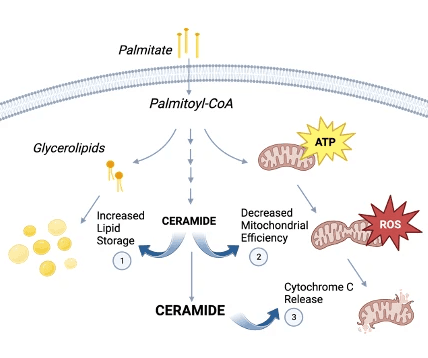
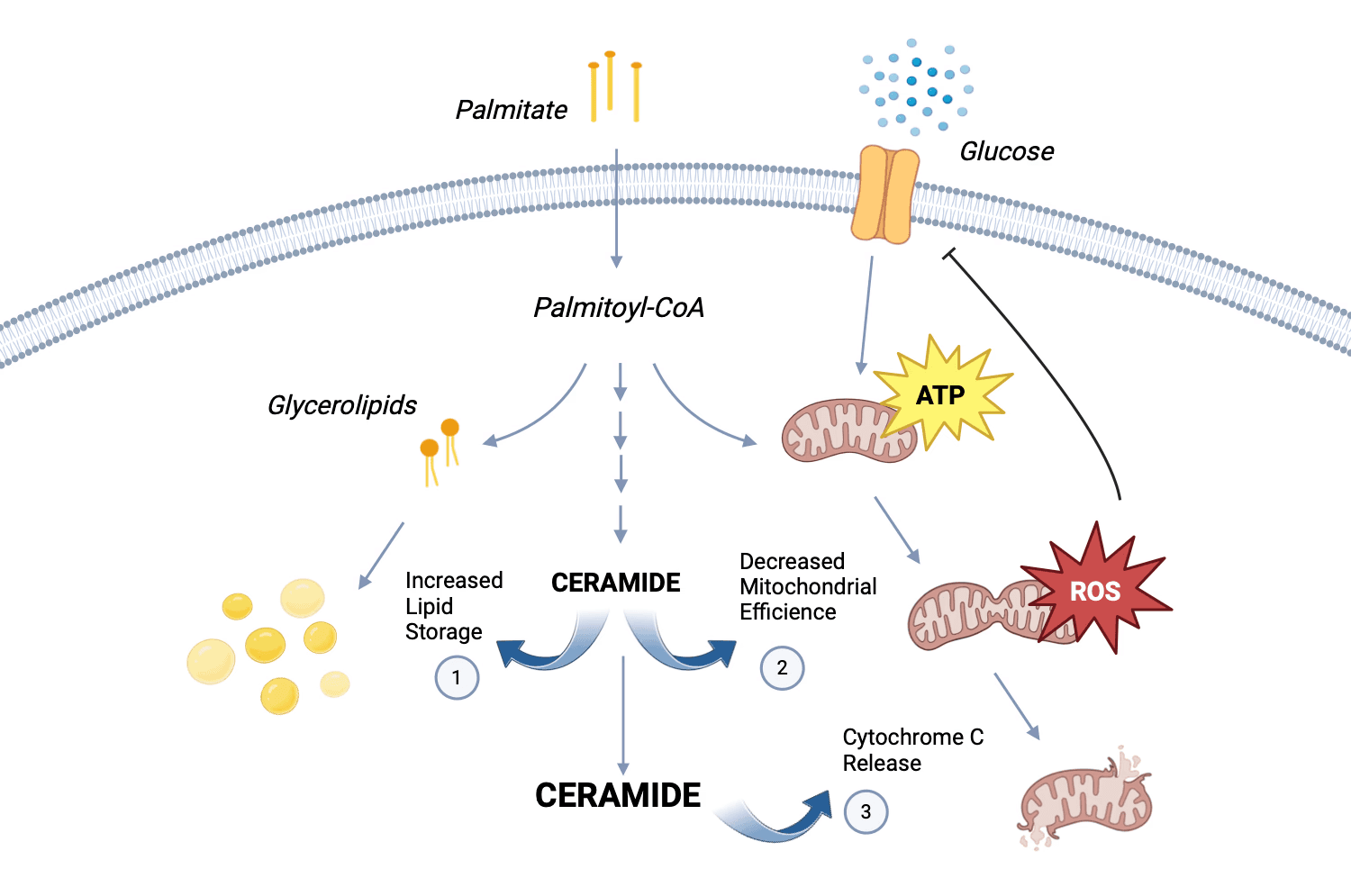
Ceramides are essential lipids, but when the body overproduces them, they accumulate in mitochondrial membranes and disrupt key functions that energy-demanding organs rely on.

Elevated ceramides:

  • reduce respiratory chain efficiency

  • impair ATP production

  • activate stress signaling pathways

  • trigger apoptosis in high-energy tissues

Elevated ceramides:

  • reduce respiratory chain efficiency

  • impair ATP production

  • activate stress signaling pathways

  • trigger apoptosis in high-energy tissues

Elevated ceramides:

  • reduce respiratory chain efficiency

  • impair ATP production

  • activate stress signaling pathways

  • trigger apoptosis in high-energy tissues

Elevated ceramides:

  • reduce respiratory chain efficiency

  • impair ATP production

  • activate stress signaling pathways

  • trigger apoptosis in high-energy tissues

Because mitochondrial dysfunction is one of the earliest and most consequential events in CKM disease progression, hyperceramidemia represents a shared driver across the CKM axis and a compelling therapeutic target.

Mitochondrial problems show up in so many diseases - heart failure, diabetes, fatty liver disease to name a few.  If we can truly restore mitochondrial health, the implications could be enormous.

Scott Summers, PhD
Distinguished Professor and Chair of the Department of Nutrition and Integrative Physiology and Co-director, Metabolism Research Center, University of Utah

"

"

A novel strategy: Inhibiting de novo ceramide synthesis

While clinicians can now measure circulating ceramides using a commercially-available test, there is no available treatment to limit their unchecked production. Centaurus is developing the first therapeutic targeting ceramides. By intervening upstream, we open a new path for treating CKM diseases.

Most pathological ceramides originate from a single metabolic pathway: de novo ceramide synthesis. This pathway becomes overactive in aging, overnutrition/obesity, and certain genetic conditions, leading to sustained ceramide accumulation.

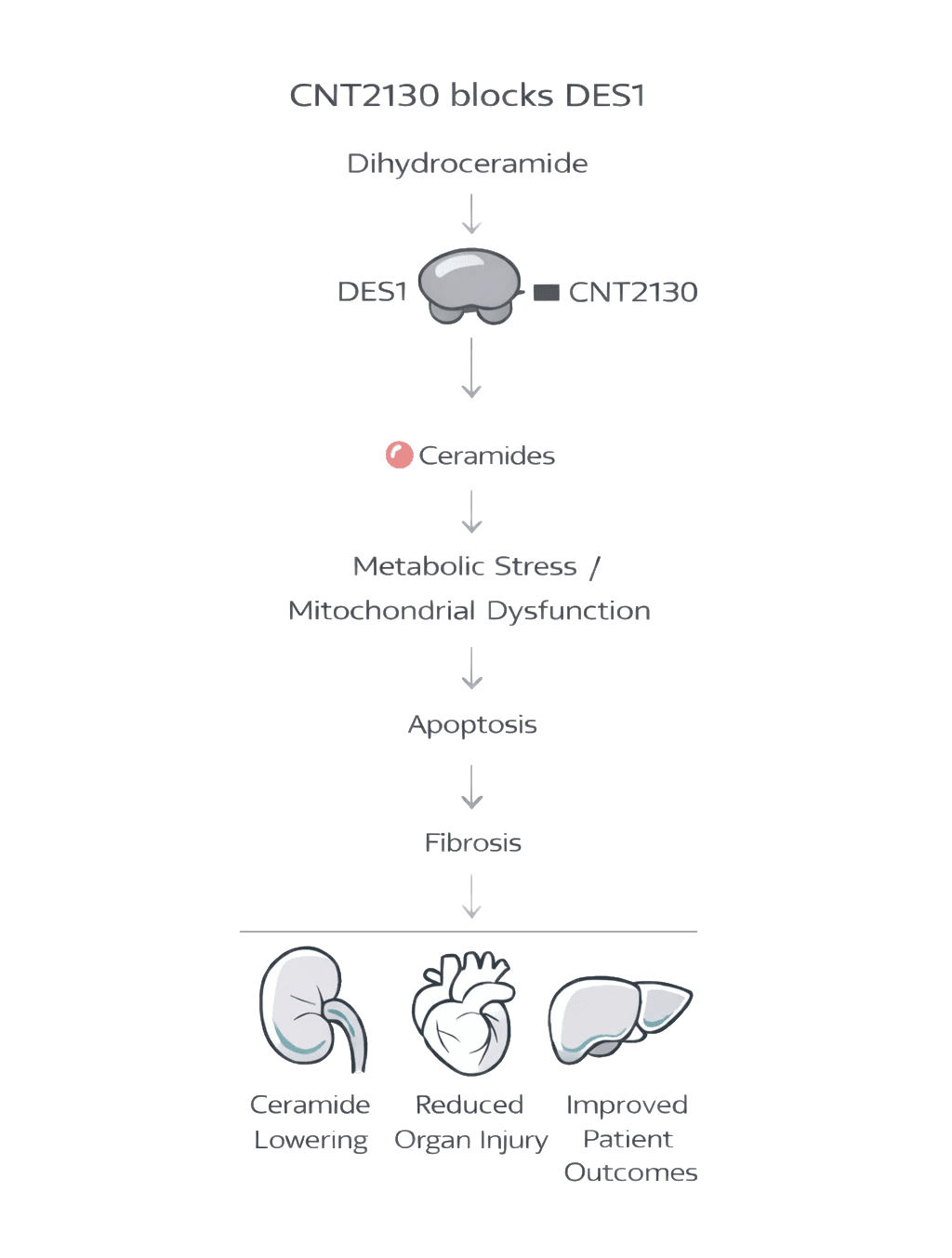
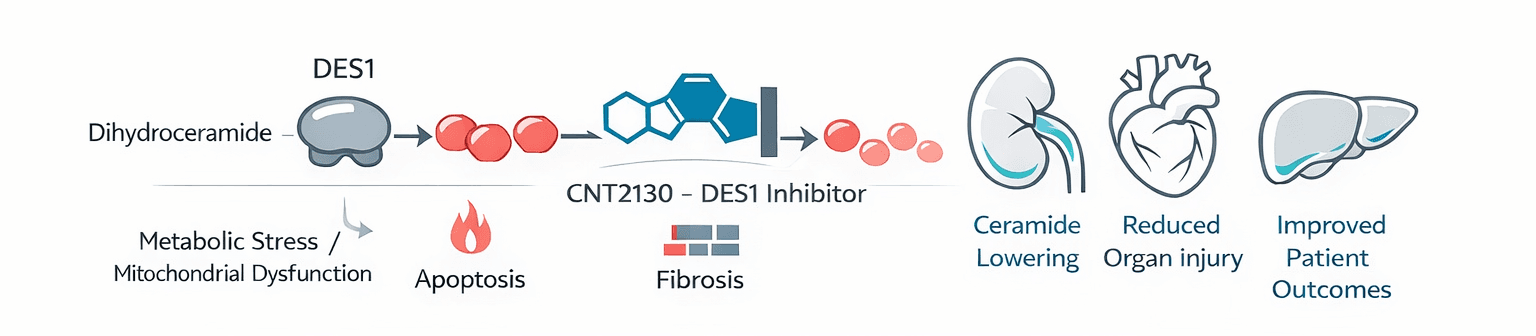
At the center of this pathway is DES1, the enzyme that catalyzes the final step in producing ceramides.

Centaurus is developing selective small-molecule DES1 inhibitors to directly reduce ceramide overproduction and blunt the mitochondrial and metabolic consequences that drive CKM disease biology.
Evidence supporting
our approach

Lipidomics

Human lipidomic analyses identify elevated ceramide levels as strong biomarkers of CKM disease.

Lipidomics

Human lipidomic analyses identify elevated ceramide levels as strong biomarkers of CKM disease.

Lipidomics

Human lipidomic analyses identify elevated ceramide levels as strong biomarkers of CKM disease.

Lipidomics

Human lipidomic analyses identify elevated ceramide levels as strong biomarkers of CKM disease.

Genetics

Emerging human genetic studies establish associations of hyperceramidemia with CKM disease.

Genetics

Emerging human genetic studies establish associations of hyperceramidemia with CKM disease.

Genetics

Emerging human genetic studies establish associations of hyperceramidemia with CKM disease.

Genetics

Emerging human genetic studies establish associations of hyperceramidemia with CKM disease.

Preclinical proof

Genetic DES1 ablation and Centaurus’s DES1 inhibitors show consistent efficacy across validated renal, cardiac, metabolic, and acute injury models.

Preclinical proof

Genetic DES1 ablation and Centaurus’s DES1 inhibitors show consistent efficacy across validated renal, cardiac, metabolic, and acute injury models.

Preclinical proof

Genetic DES1 ablation and Centaurus’s DES1 inhibitors show consistent efficacy across validated renal, cardiac, metabolic, and acute injury models.

Preclinical proof

Genetic DES1 ablation and Centaurus’s DES1 inhibitors show consistent efficacy across validated renal, cardiac, metabolic, and acute injury models.

Broad, multi-organ impact

DES1 inhibition restores mitochondrial function, enabling a pipeline spanning chronic and acute CKM diseases.

Broad, multi-organ impact

DES1 inhibition restores mitochondrial function, enabling a pipeline spanning chronic and acute CKM diseases.

Broad, multi-organ impact

DES1 inhibition restores mitochondrial function, enabling a pipeline spanning chronic and acute CKM diseases.

Broad, multi-organ impact

DES1 inhibition restores mitochondrial function, enabling a pipeline spanning chronic and acute CKM diseases.

First-in-class drug candidate

No current therapy reduces ceramide overproduction, DES1 represents a novel mechanism.

First-in-class drug candidate

No current therapy reduces ceramide overproduction, DES1 represents a novel mechanism.

First-in-class drug candidate

No current therapy reduces ceramide overproduction, DES1 represents a novel mechanism.

First-in-class drug candidate

No current therapy reduces ceramide overproduction, DES1 represents a novel mechanism.

Strong safety data

Over 2 years of monitoring in animals confirms safety of DES1 inhibition with no adverse events observed.  Target inhibition precedent in humans.

Strong safety data

Over 2 years of monitoring in animals confirms safety of DES1 inhibition with no adverse events observed.  Target inhibition precedent in humans.

Strong safety data

Over 2 years of monitoring in animals confirms safety of DES1 inhibition with no adverse events observed.  Target inhibition precedent in humans.

Strong safety data

Over 2 years of monitoring in animals confirms safety of DES1 inhibition with no adverse events observed.  Target inhibition precedent in humans.